Wednesday, 4 May 2022

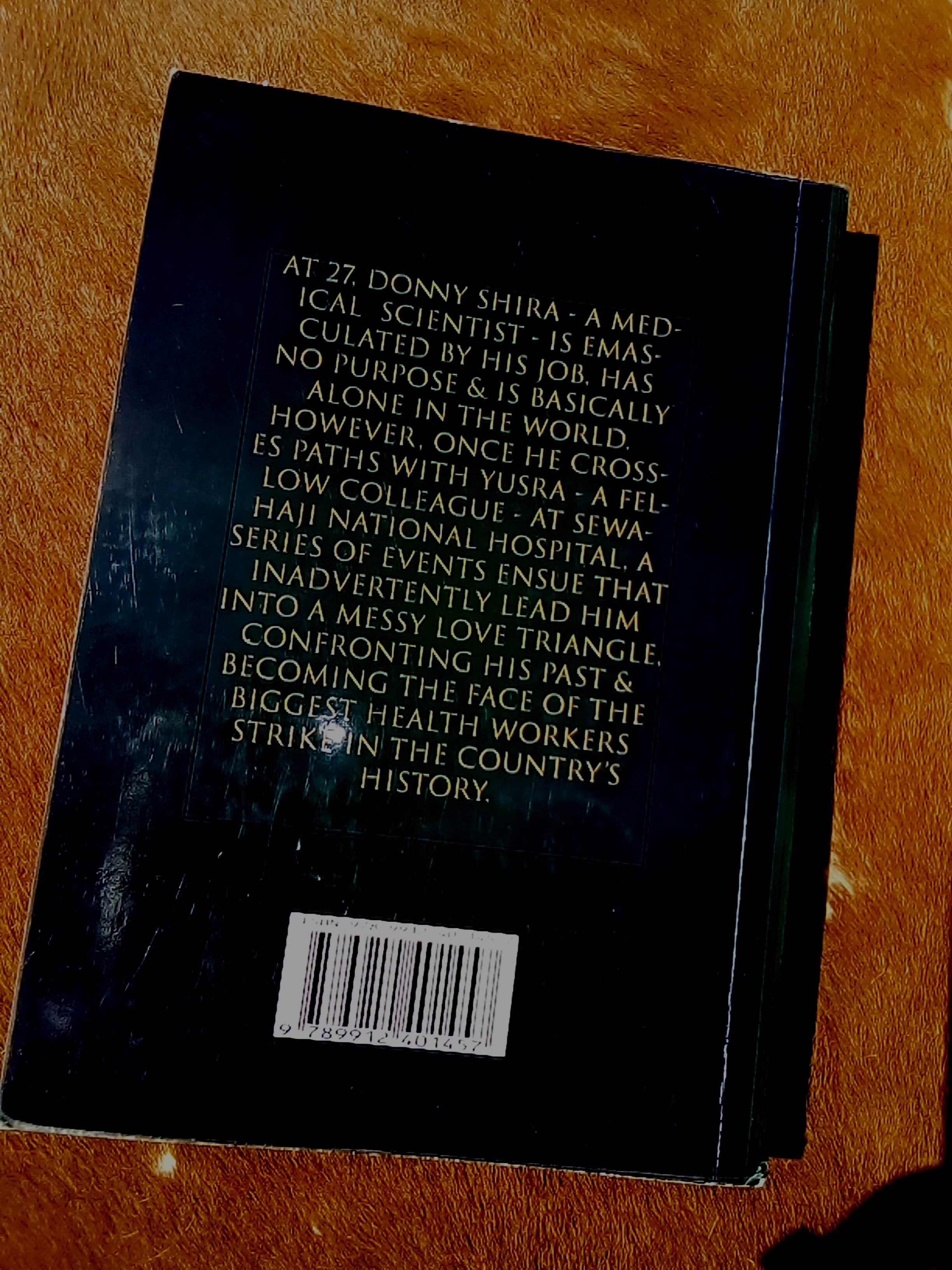
Rustling the pages of 'Fine Needle' by Hamdan Hussein TZ


Author Hamdan Hussein holding a copy
of his debut novel 'Fine Needle'

I haven’t read many novels by millennials so it was refreshing to read a novel by one from Tanzania. Where you bump into references of known celebrities like Ali Kiba, John Legend, Kanye West, “They were pictures of my birthday cake whose theme was ripped off straight from Ye’s POWER track cover art.”- Fine Needle by H. Hussein. 

The author Hamdan Hussein is a licensed medical practitioner in his early thirties and in this his debut novel, the main character is also a medical practitioner who is 27yrs old. Coursing through the pages you get the feeling the novel has a lot of parallels with Hamdan’s own life, as Donny the main character also has penned a novel. “”I like the novel by the way. You’ve got a knack with words,” she said softly.” Yusra-Fine Needle by H.H  

Fine Needle is a drama with embers of a thriller in its plot, told from the main character’s lens Donny Shira. It uncovers critical events following the first job Donny is in as an intern at Sewahaji National Hospital. As you bump into hospital terminologies in abbreviations like CPL-Central Pathology Laboratory, FNAC-Fine Needle Aspiration Cytology. This hospital world comes to life as a believable place where we meet Donny, Yusra, Benny among others.

Donny had a rocky childhood with his father dying while he was at the tender age of one and his mother soon following suit. From his teen years he practically raised himself which leaves him with a somber outlook on life. “I need to look out for number one. I’m on my own. I’ve always been that way my whole life.” Donny-Fine Needle by H.H

Still it was amusement more than empathy that kept me turning the pages, as Donny and many of the characters in this novel. Are flawed yet endearing as you can picture persons in your life with these same outlooks. Take Donny’s view of women to him a woman who is with child and not wed wears a warning sign and while he is ok to have an office fling. He goes on to name the lady in question whom he’s had a few sexual encounters with as ‘same crazy bitch’. 

However flawed the characters they also have amicable strengths that unravel in a plot that is well defined. Allowing me to finish the book (287pages paperback) sparsely within two days; you see Donny is very passionate about justice for the medical workers particularly those working as Clinical Laboratory Scientists. Donny goes to lengths to protest the rights of those in his profession. In between he falls in love and in lust but also he finds out things about his childhood. That allow him to see his father in a new light, another endearing character in this book is Yusra. Yusra is a strong woman who is a young single mother that still manages to forge a strong career. She is Donny’s superior and their interactions give much of the sauce in this book, I liked her unapologetic demeanor.

Fine Needle is also a social commentary; set in a country called ‘Tanzagiza’ with a Minister of Health called Hon Umami Maalum and a President recently sworn in after the death of a Hon Joseph called Hon Mama Samira. As an East African you will quickly get the tongue in cheek connotations of these characters names, which resemble real figures. Here the author uses his work to highlight the plight of freshly graduated students as they encounter the working field with student loans and working conditions that are unsavory.

The story is juicy and the end is savory my only qualm with this work as it is self published. Is the lack of a strong editor behind it, which in the fiction publishing world of Tanzania can’t be faulted much as the market is rocky. Really you should be proud of an author who completes the effort of writing and publishing. But yes this work will be elevated to the rung it deserves with a good editor. So that its characters are more defined and the pace smoothed to allow for a more gripping tale. That said it is definitely worth a buy especially as it sheds light to stories seldom told. The book if in Dar es Salaam is available at Ridge Café otherwise you can order it via this email heleluhelelu@gmail.com or contact the author directly on his Instagram page here

n.b. this article written by Caroline Uliwa was first published in The East African newspaper here

Klaus Hartman's exhibition 'Somewhere between Kapiri Mposhi & Dar es Salaam'

The painting with the red border
by Klaus Hartmann in his exhibition
'Somewhere between Kapiri Mposhi & DSM' recently

Travelling by land, who hasn’t been lulled by the landscapes swooshing by letting the mind get blurry becoming one with your imagination. It’s this sentiment of passing landscapes whilst in a vehicle that Klaus Hartmann 52, captures so well in his exhibition ‘somewhere between Kapiri Mposhi and Dar es Salaam’, that debuted on the 26th of March at Nafasi Artspace in Dar es Salaam. 

A resident of Germany, Klaus was in Tanzania as part of a residency program offered by Nafasi, which hosted him for seven weeks. This arts residency program inviting international artists to interact at Nafasi (an arts hub hosting several local fine artists’ studios and a fine arts academy) has been running since 2010.

“My first time in Tanzania was in 1992, I came to visit my sister who was working at Muhimbili hospital. I have a long standing connection with Tanzania.” Klaus answers on why he chose to work in Dar, it turns out his childhood had him meeting a few Tanzanians that left a good impression on him; they had come to visit his church where his father was a preacher. Thereafter his decision to visit his sister back in 92 was easy. In fact he came back again on his own in 2011 & 2013 to teach at the TaSuBa college of Arts in Bagamoyo.

Another beautiful painting
by Klaus Hartmann at this exhibit
at Nafasi Artspace in DSM

At this exhibition in the carefully designed ship container that is part of the gallery space of Nafasi. Were drawings in A4 size canvas lining the walls, titled after the exhibition ‘Somewhere between Kapiri Mposhi & Dar es Salaam #1, #2, #3 & so on’. These sketches are landscapes depicting single buildings mostly old some in their later stages of decay. It’s the way they are presented that oozes an unexpected reverence. Derived from the attention to detail Klaus gave them, stemming from the color choices the perfect proportions and seasoned texture. I as well think placing these buildings, that otherwise in real life would cause a passerby no second glance. As single points of focus add to this reverence as they’ve become history, living documents of human footprints. 

The initial idea was to do some drawings and document some footage from the trip but during my time in the train my plan changed a little bit as there’s so much life in the TAZARA…Klaus shares of the inspiration behind this exhibition. Last year he was in Zambia for another residency where which he took a trip on the TAZARA train from Kapiri Mposhi to Dar es Salaam. He was very glad to get a chance to come back in Africa and complete the drawings from that trip. As he shares it’s easier to capture the exact color tones and other minute details than if he did them in a studio in Germany. It follows the works of this exhibition are all inspired by the footage he took of the landscapes he saw while on that train ride.

An audience looking at the reel of
photos by Klaus Hartmann in his exhibition in Dar recently.
This photo was taken by Dipesh Sapriya
Apart from the drawings this exhibition as well showcased a few realist/impressionist paintings that really display the skill of this artist. My favorite includes the only one with a red border. Highlighting a redbrick bungalow of modest means underneath the most beautiful star studded sky, its contrasts, texture, the sheer soul reaching beyond the canvas of this painting is just serene. Looking at the other paintings by Klaus here, I was impressed by detail and proportion, the way he strikes a careful balance between realist and impressionist.

Speaking with the director of Nafasi I learned that Klaus in his time at the arts hub got to cater 

to a weekly mentoring program for the fine art students at Nafasi Academy. We’ve had three sets of resident artists this year a duo from Switzerland & Berlin, a duo from the USA and now Klaus from Berlin and next time well have an artist from Kinshasa…Klaus for instance did a weekly mentoring program with the students which was really lovely.” Rebecca Corey went on to share how this residency program exposes local artists with experiences of international artists allowing for stronger networks and a sharing of skills.

None of the paintings at this exhibition going on till the 9th of April sponsored by the Goethe Institut in collaboration with Nafasi are currently for sale. However Klaus looks to showcase them with other pieces at a gallery in Hamburg in May or June this year, where audiences can purchase his works for more info visit his website https://www.klaushartmann.eu/

n.b. this article written by Caroline Uliwa was first published in the East African newspaper here

Tuesday, 5 April 2022

Scrolling the pages of 'If She were Alive'

 By Caroline Uliwa

Photo courtsey of Lubacha Deus

You don’t appreciate the importance of representation until its implementation soothes your psyche. I am referring to witnessing characters in works of art from various parts of the world, not only from those in affluent societies. If She were Alive is a young adult novel by Lubacha Deus, going through it was endearing in the way it painted scenes of villages in Tanzania.

In this novel Lubacha has a good command of plot and conflict, as from the onset our main character Wema. A 12 year old Sukuma girl from a village in Mwanza, pulls your heart strings to keep on turning the pages quickly so you learn of her fate.

“I have no money mama. I didn’t intend to do this. Naomba nisamahe! Please forgive me.” “Forgive you? Will you buy them back?”…Wema was now crying. “You see? You can’t buy them back and you want me to forgive you? And why did you tell your father that I took the money? Today you’re not going to eat, I swear. Go and bring a cane. Now!” excerpt from If She were Alive by Lubacha Deus.

Wema goes through a lot for a girl her age beginning with the loss of her mother. Which leaves her at the hands of her step mother (the father had two wives) she is the one Wema is having a dialogue with above after Wema accidentally breaks some dishes.

Lubacha just about succeeds in ensuring this book isn’t a complete sob story by placing a careful balance. Between the conflicts which include heavy canning, jail time, homelessness, poverty with candid depictions of everyday life in the village. This is also supported by the way the description of the burdens facing the characters is done swiftly not dragged out for days.

“She went to sit under the nearby big tree nicknamed Gamboshi because it was equated to witches’ headquarters according to Sukuma tribal stories. This tree was unusually green throughout the year and its branches spread downward like the flying eagle.” From the novel If She were Alive.

This book makes for a good read particularly for those aged between 12 & 17 yrs, I finished it within a day. My only qualm with it is how its theme based on the importance of girl’s education and the perils of poverty. Was hammered a little too thick for a fiction read, take the ending for an example. This novel has one of those ambiguous endings but sadly instead of it passing as artistic license. It reeks of advocacy and so somewhere you’re quickly reminded this is a tale, instead of being truly immersed in the world of Wema at Kolomije village.

If She were Alive was sponsored by the CODE Burt Award for African Young Adult LIterature published in 2019 by Mkuki na Nyota. It’s available at TPH bookstores in Tanzania as well on order from these websites Mkuki na NyotaAmazon  and the African Book Collective .

n.b. this article was first published in The East African newspaper on the 26th of March-1st April 2022 edition

Bahati Female Band paving the way for female musicians

 By Caroline Uliwa

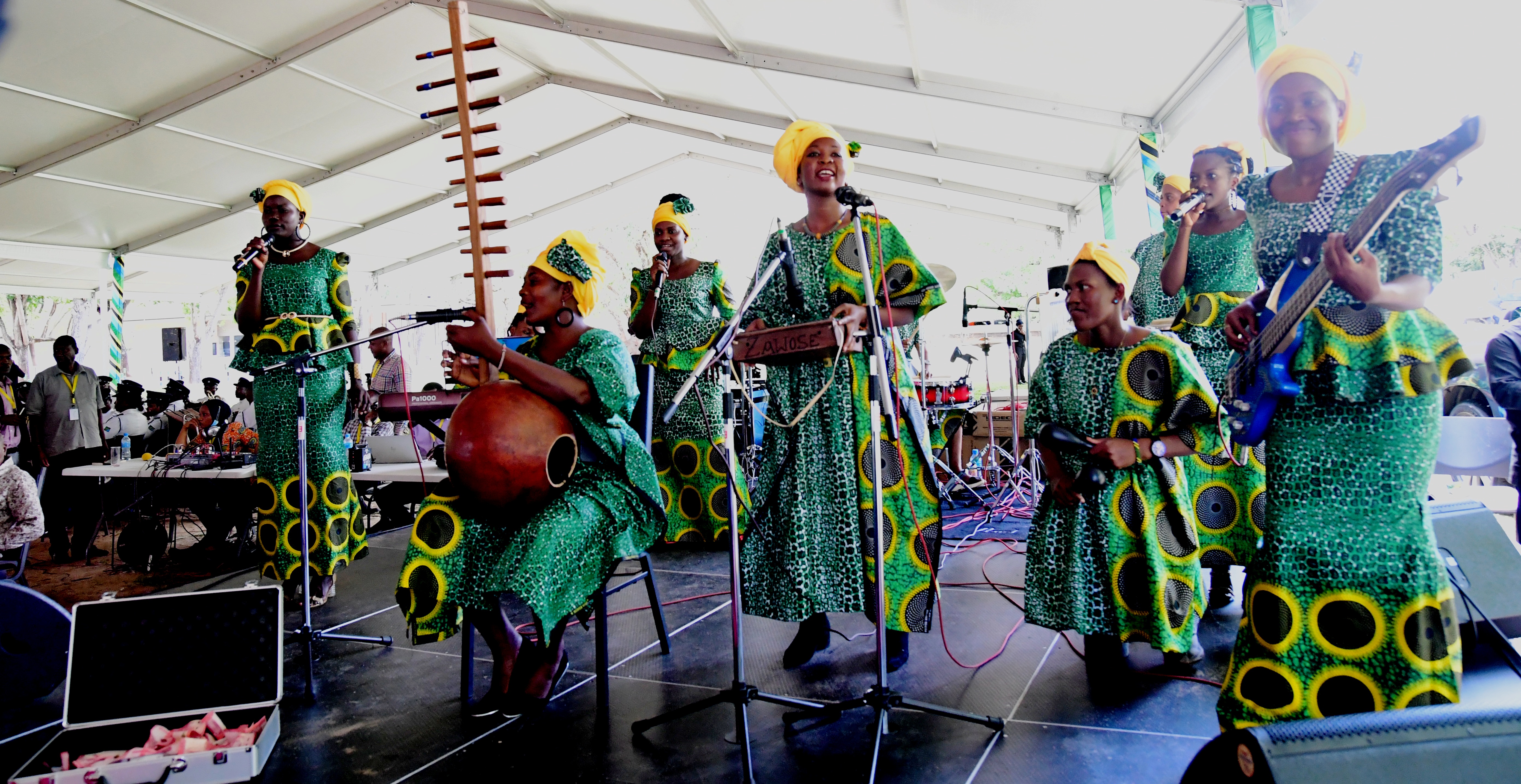
Members of Bahati Female Band dancing on stage
at the Sauti za Busara Festival 2022

Worldwide the music industry is heavily male dominated, indeed in Tanzania to chance on a full band with only female performers is rare. Yet this is the case with ‘Bahati Female Band (BFB)’ founded in March 2020 with Pili Maguzo as its director. It includes eleven regular members with four more on call. 

The band in its short tenure has already been featured in this year’s Sauti za Busara festival, with its first big break occurring. When they were asked to perform at the ‘Malkia wa Nguvu’ (Mighty Queens) award ceremony in Dar es Salaam last year, since then they have been steadily gaining ground until they met with government function gigs, some of which have seen them performing in front of the President of Tanzania Hon Samia Suluhu.

A sit down with three of the members of the band including Pili, had me uncover some special building blocks to this union. “I recall at the beginning speaking with band members saying they’re not sure they could do this. I answered as long as we’re together bearing in mind we could all use a brush up of our skills, we can learn and make it. Sure enough soon after we got help from teachers like Kauzeni Lyamba who was among the first supporters of this band.” Pili reveals. 

Members of Bahati Female Band with their leader
Pili Maguzo (second back row from left) from Tanzania

Pili is an experienced dancer & choreographer before forming this band she was part of Bahati Arts Group a traditional/contemporary dance & theatre group for social outreach. With time she saw an opportunity to evolve the group, by revamping it and inviting female artists to form BFB. The recruitment process involved call up’s of known musicians in her networks but as well scourging social media for talent through auditions which is how she met Nipaeli. 

“I was called then asked to send some videos which I did, I had learned to play the piano from Turn around Music Academy, Music Mayday and later to gain my ABRSM music theory certificates I enrolled at Little Fingers after Music Mayday closed.” Nipaeli Mtana shares how she came to be a member of BFB. Nipaeli has a physical disability with her legs such she uses a wheelchair. It was the intention of the leaders of the band to bring more inclusivity to this group and so BFB has more than two members with a disability.

BFB performs ‘Afro Fusion’ music where the traditional instruments of Zeze & Kalimba replace the lead guitar to form unique sounds. BFB core members include Doris Kivinge (base player, dancer), Nipaeli (Keyboardist), Brightan Richard (Drummer, percussionist), Mary Mshana (singer), Grace (Big Zeze, Singer), Leah Ndehani (Kalimba, singer, percussionist), Sharapova (singer), Taj Baraka (Bassist), Esther (keyboardist, drummer), Mariam (drummer) and Neema Paul (singer).  

From left Brightan, Nipaeli, Leah on the Kalimba, Grace on the Zeze, Taji Baraka on the
Base with Mary & Neema singing
“I learned the base guitar from pestering fellow musicians like Sam Mpangala, Macha & Kauzeni. I sincerely appreciate them as well I’ve attended workshops and learned online. What pleases me the most about BFB is our camaraderie, when I enter our rehearsals any stress of the day goes away, I get to laugh learn and be part of a team that truly cares for one another.” Doris adds on why her time with BFB has been a plus. 

In the beginning when the band was looking to rehearse it was tough as they didn’t have any instruments. Thankfully one of their patrons Mme Carola Kinasha supplied them with instruments; they weren’t in good shape but BFB is very grateful for them, as they allowed them to hone their skills & create songs of their own. BFB has a board with its registration with BASATA (National Arts Council TZ), the board met inclusive of patrons like John Kitime. Where letters were drafted and sent to several sponsors asking for contributions to allow the band to officially launch itself to the public. Thankfully the first letter to be answered was from the state house, where the President herself Hon Mme Samia gifted the band with a full set of new music instruments including speakers. 

Members of Bahati Female Band, performing at a government event recently

"We were so so happy, at the state house the President asked us to test the instruments for a day first to see if they fit or should be returned. Thankfully we used them and told her people they were fine.”Pili shares of this milestone that has allowed the band to continue to thrive, as now they no longer need to hire instruments for their shows. Already this year they were nominated for best traditional song of the year in the Tanzania Music Awards

In tabling the challenges that they currently face, the band is keen to continue to grow and is calling for music teachers who are willing to volunteer their skills to please visit the band. As well BFB welcomes young female musicians to their space to learn and or to get advice. Their road however isn’t smooth as members like Nipaeli find themselves with special needs as Pili highlights “We would love to get a wheelchair for Nipaeli the one she uses the tires are all but gone, plus public transport for my disabled members is many times not an option and this cuts our budget.”

Indeed if you would like to contribute to this band you can reach them via this link BFB Instagram. Otherwise you can currently catch their performances on YouTube by searching ‘Bahati Female Band’.  

n.b. this article was first published in the EastAfrican newspaper on the 19th-25th  of March 2022 edition

Monday, 28 February 2022

Sauda J. Simba Trailblazing a Multitalented Path

By Caroline Uliwa

In the creative circles of Tanzania we know her as Ma Sauda, a quiet character with an inquisitive  disposition and an open mind allowing her to mingle with people of varied backgrounds. Sauda Jasmin Simba 60 is an actress, singer, children books author, PR / Marketing Exec and a philanthropist. Currently she is one of the lead actresses in the Television drama ‘Jua Kali’ which airs on DSTV in the Maisha Magic Bongo channel. 

Sauda’s career has seen her alongside, high profile individuals like Hugh Masekela, Hon Jakaya Kikwete, Mr. Reginald Mengi and Jose Chameleon to mention few. I was curious to uncover her journey, which is how one late morning in Feb, found me sitting on her verandah in Dar es Salaam. While she went inside to brew some lemongrass tea and I kept admiring the artworks on her walls (wood masks, metal sculptures from all over the world). When she got back it was with a thick scrap book, which I quickly learned had news strips, photos, & other little mementos throughout her adult life. So we sat and sipped, as I uncovered the blocks that have built this quiet icon. 


Early Years

One of Sauda Simba's earliest authored children
book.
 
Ironically Sauda Simba’s education background is quiet far from the expertise she developed in her career, for she holds a BSc in Human Physiology from Trinity College in Ireland. She recalls while doing her masters realizing that, “Science wasn’t a passion for me, I couldn’t see myself pursuing it.” Sauda divulges. 

Thankfully at the college there were some art students she had made friends with. They introduced her to a theatre group and later through these networks she ended up as lead singer in a small jazz band called ‘Cheza’. This was during the early 80’s; Sauda went on to show me news paper cuttings highlighting decent reviews in local newspapers of her bands performance. Sauda would also go on to perform in a play, a rendition of ‘Three Women’ by Slyvia Plath that as well got reviewed in an Irish newspaper with these words. ‘Christy, Sauda and Patricia Burgess would infuse feeling into their lines without emotional excess; it’s not a primary function of theatre to send one back to the written word. But it’s still a tribute to this production and it generates an interest in examining source material more closely’

Gaining Experience

Sauda Simba (middle) with her cast mates inside 
the TV Serie Jua Kali, currently airing on DSTV


Sauda had been in Europe for much of her teenage years as her father the late Hon Iddi Simba (former Minister) was posted in the UK, as the resident director for the African Development Bank. So when she finished college her return to Tanzania was after almost a decade of being away, back home her mother had started a company that she thought best to join.“So I went into the family business doing sales and marketing basically. That was going pretty good as a kind of first job, I remember going door to door and really getting to know Dar es Salaam after being away for so long.”

Her time in the family business bore fruit, as soon an opportunity arose where they won the bid to be Macmillan Publisher’s agent in Tanzania. By then it was the mid 80’s, Sauda was placed at the helm of this wing of the company. The job entailing lobbying for Macmillan text books into to the Tanzanian market. 

Sauda Simba (right) with her daughter
Maya Kilumanga
This unfurled a love she still holds today of early childhood education, the family business here would establish Diamond Publishers which Sauda headed. It went on to publish nine titles of children literature books. Five of those titles were authored by Sauda including ‘Kuku mweusi na Kenge’, Mvuvi wa Samaki wa Ajabu (which she co-authored with Herman Mbwana) and Saa Ngapi titles of which are still in print now under Mkuki na Nyota Publishers (she later gave them publishing rights after Diamond Publishers defunct).

During her time with Diamond Publishers, Sauda would head to a call and win the audition to become a news anchor at Radio Tanzania, in their international service. “So I started doing that part time, we got picked up in this old rickety thing but it was so much fun. We’d go to the offices and in the canteen there’d be ‘chai ya maziwa & mkate wa siagi’ it was a real time of bonding.” Sauda fondly shares as she forks through her scrap book.

Pre School students at Ushindi Primary School in DSM,
with their class teacher. Posing for a photo at the debut of this
 classroom revamp spearheaded by Sauda Smba's efforts
 through crowd funding

In 1989 Sauda got married to the diplomat Chabaka Kilumnaga and in 1990 gave birth to her only daughter Maya. She’s currently no longer with Mr Kilumanga, but back then the early nineties saw her travelling again to Russia where Mr Chabaka was stationed. Perhaps from her experience with Diamond Publishers, she landed a job first as a substitute English teacher and later as a full time Kindergarten teacher at the Anglo American School in Moscow. This worked out well for her as her daughter went to the same school and this helped her to acclimatize to the foreign environment which they lived in for almost 5 years. 


As a Cooperate professional & Philanthropist

The latest children book by Sauda Simba published in 2021
When Sauda came back home with her family, it was to land a similar job at the International School of Tanganyika in Dar es Salaam as a pre-school teacher this was in 1997/98. Soon she would bump into the opportunity of being a News Anchor this time for television-ITV.  

This exposure on TV is how many of us got introduced to Ma Sauda, she would soon after be called to work as a PR and Marketing professional inside Tanzania Breweries Ltd. “So one day Aggrey Mareale calls me to come for an interview for the position of PR for TBL I ended up getting the job and this was my start really in working the cooperate space. “ Sauda shares of her time at TBL which saw her as the brand manager for Redds, Konyagi Ice and later Kilimanjaro Lager. 

Her experience in PR and Marketing grew as she would go on to work for Barrick Gold and later Africo Resources in DRC Congo in the same capacity. Her experience by the time she returned from the Congo had her starting her own PR/Marketing firm Triniti Promotions which she’s been the director of for over a decade. 
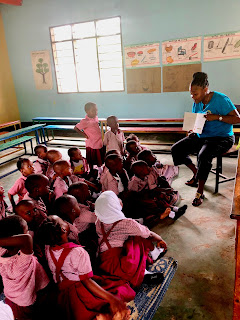
Sauda Simba reading children stories for the
 kids at Ushindi Primary pre-school in Mikocheni,
Dar es Salaam

While Sauda strengthened her roots in the corporate world, she saw an opportunity to give back in an area she is passionate about. When during her work in a small village of Mdokonyole in Morogoro, seeing kids sitting on a log for a classroom!“ I started fundraising to build a classroom; we ended up building it a complete building with windows and doors. We had enough to even buy them desks.” Sauda.

To date for almost four years now Sauda has been involved in a charity project close to her home in Dar es Salaam. As a former pre-school teacher she was aghast when during a walk in her neighborhood. She stumbled into the pre-school classroom of Ushindi Primary School looking ugly. She then went on to use social media to pledge 100USD asking for crowd funding to revamp the classroom. Her efforts were successful and through community efforts today, the classroom is revamped as well a storeroom that is now a welcome play pen for the kids.“The kids are so happy, every year we have a little party with them. I partner with my friend Veronique Iyakuze, she has a music school. She has offered a scholarship for two kids here to join her school.” Sauda adds currently they also provide the teacher at this pre-school with volunteers to assist her during the week.

As a Creative

Sauda Simba performing in Sweden while promoting 
her album 'Sauti ya Sauda'

Sauda remember is also a creative, she is a known actress in Tanzania with her big break. Occurring when she got a cameo to feature in Egoli in 2000, then a booming soap opera from South Africa featured on DSTV. She got this chance after a rigorous audition while she was stationed at TBL. Ever since she has been featured on several successful film productions from Tanzania, including the movies Girlfriend, The Big Shot directed by Neema Kambona with Imruh Bakari as Exec Producer, Child Protective Unit, Binti (the first Tanzanian film to be shown on Netflix) as well as the demo of ‘Ahadi’ by Azam TV & currently the acclaimed Tanzanian drama (scooping eight awards at TFF 2021 awards) Jua Kali a Multichoice production. 

Sauda is as well a musician with two albums to her name, Simply Jazzmin 2006 and Sauti ya Sauda 2009. She has performed both locally and in Europe among the highlights being featuring as curtain raiser for Hugh Masekela when he visited Dar es Salaam in 2011 and performing at Sauti za Busara in ZNZ.

Sauda Simba (second right) with fellow cast
mates Iddi Sultan & Godliver Gordian
in the pre cast show of Ahadi for Azam TV
Sauda’s talents don’t end there apart from her children books with Diamond Publishers, she later went on to write & publish ‘The Pond that lies in my Village (Mkuki Publishers), My Wonderful world of Senses (E&D Publishers). Where currently she is promoting her latest children book which she self published called ‘Napenda Nini’ “I wanted a book highlighting an African little girl with her father being a part of the story. It’s for preschool so it’s very simple. I partnered with Cloud Chatanda to do the illustration.” Sauda adds that the book is available for order through her website of Trinity Promotions.

When I asked her how she overcame the naysayers as women from her time, were simply not encouraged to be actresses or heads of their own firms. She said “Yes they’re negative influences and yes they’re times you think shit, can I really do this. But the steps you must take are yours; don’t be afraid to make mistakes. I believe in knowing who you are, being confident in what you do and listening to your inner voice.” Well there goes Sauda certainly reminds us it’s ok to embrace the different facets of ourselves with no fear.

n.b. this article was first published in the East African newspaper with this link Sauda the EApaper

Book Review-Biubwa Amour Zahor-Mwanamke Mwanamapinduzi

By Caroline Uliwa

It fairs Biubwa Amour Zahor age 84, should have been born forward in time given her progressive feminist leanings. Renowned journalist Zuhura Yunus, in penning her biography written in Kiswahili, sheds light on an unsung hero from Zanzibar, Tanzania.

“Normally when our countries political history is told, the stories heavily favor men. The contribution of women is many times forgotten; however some of us have contributed and participated in many of the critical historical moments of our country.” Translated from Biubwa A. Zahor’s letter shared in this books foreword.

Many of us born in the waning years of the 20th Century, making up a huge slice of our population have heard narrations & images of historical moments in our countries like the gain of Independence or Zanzibar’s revolution of 1964. In a manner we can’t closely relate to especially as women, for these documentations are militarily formal with women’s visibility in them being scant.

Perhaps why this book quickly drew me to turn on the pages as it paints from a behind the scenes perspective that’s endearing. Mme Biubwa of Arabic descent is a brave woman who believes in equality for all. Ostracized from her family for marrying an African, in a time where a woman’s virtue was heavily measured by her home grooming skills. We encounter this daring individual, a Zanzibarian woman from the 50’s who gets divorced and is remarried more than once. Who survives rape, gender violence at the hands of her husband & public official all along knowing how to handle and hold a shotgun.

Biubwa was drawn to standing up for social justice since her teen years when she joined the ‘Girls Guide’ group and later ‘Zanzibar Women’s Association’. She later became a member of the political party Afro-Shiraz (ASP), having close alliances with persons from the Umma Party headed by Abdulrahman Babu. Whose wife was a dear friend of hers since her teen years. 

Zuhura in penning this book shares a biography that is laced with anecdotes divulging key events in history from the Isles. Like the assassination of the first president of Zanzibar since the revolution Hon Abeid Karume and the events leading up to Zanzibar’s revolution in January 1964. The East African citizens from Uganda & Kenyan who aided this revolution, the racial tensions between the Arabs & Africans experienced at the time and more. 

Though as an ASP member Mme Biubwa played an instrumental role in Zanzibar’s revolution. Upon the assassination of President Abeid Karume she was jailed as some government officials didn’t like her close relationship with the first family. Her incarceration that year was together with some 80 plus people all brought in on trumped up felony charges; she was jailed for four months plus. “Biubwa hakuwazaa kabisa kama angekaa gerezani muda wote huo na siku tatu baada ya kutiwa ndani alichukuliwa na kupelekwa nyumbani kwake kwa nia ya kupekura makazi yake.”Excerpt from the book Biubwa Amour Zahor-‘Mwanamke Mwanamapinduzi’ by Zuhura Yunus

Zuhura goes an extra mile in painting the ambience of the time, working to divulge names of other Zanzibarian women political activists like Mwanaidi Dai, Fatma Karume, Aipe Mzee, Khadija Jabir, Mwanaidi Hassan, mtumwa Fikirini, Pili Jaha Ubwa and others. A lot of the historical facts shared in this book are corroborated by other sources divulged in footnotes of the book.

On the 9th of Jan 2019 the then President of Zanzibar H. E Dr Ali M. Shein honored the political efforts of Mme Biubwa A. Zahor with a Medal of Honor. In fact this book has a blab by former president H. E Jakaya M. Kikwete saying “Nimefarijika sana kuona Biubwa Amour ahor akipewa nafasi yake stahiki kaitka maandishi na makavazi ya historia ya Mapinduzi Matukufu ya Zanzibar na Ujenzi wa Taifa la Tanzania kupita kitabu hiki.” Hon Kikwete shares how happy he is to see Mme Biubwa honored in history for her courageous efforts.

Why did it take so long to acknowledge the efforts of Mme Biubwa, illuminates the still steep uphill battle for gender equality on the continent. Mme Biubwa is a trailblazer who broke custom and fought for justice that is well to be shared with our current and future generations. In order to continue to inspire just actions and revolutions that uplifts the region & continent as a whole.

This book is published by E&D Vision Publishing Tanzania and is available for order on Amazon as well in several bookstores in Tanzania like TPH, APE Network, Mak Solutions, Dar es Salaam bookshop & A Novel Idea in Dar es Salaam, Dodoma Bookshop in Dodoma and Kase Stores Ltd in Arusha. 

n. b. this article was first published in the east african newspaper with this link Biubwa Amor-The East African

Tuesday, 4 January 2022

Sweet Chronicle of Swahili Coastal Norms 'Harusi ya Dogoli'


Book Review: Author Athumani Mauya

By Caroline Uliwa

As I finished the book, I wished the author was my history teacher back when I was in high school. Boy would I have lapped up anything he threw my way, were it delivered like this novel. Harusi ya Dogoli is a Kiswahili novel the title translates ‘Dogoli’s Wedding’. 

The novel is really a contemporary historical memoir, born of the author’s strong conviction that he shares in this novel's foreword. “Aidha mwandishi ameamuwa kwa makusudi kuandika mila na destrui za watu wa asili ya ukanda huo kwa vile ndizo alizoona na kusimuliwa na wazee wa ukanda huo.” The foreword goes on to explain how Athumani Mauya (a retired school teacher from Bagamoyo), sees it's imperative to record East African coastal norms & traditions, as they have been eroding drastically due to foreign religions & globalization. 

Set in a village in coastal East Africa in what sounds to be the middle of the 20th century. The pull to keep turning on the pages, comes from the trove of information, history. That Mr. Mauya weaves with a commendable appreciation of the female psyche, as while the novel is about Dogoli a male character. Harusi ya Dogoli is carried strongly by female narratives. “Kungwi akachukuwa majivu ya uvuguvugu na kumpaka Kijakazi sehemu za siri na kumnyonyoa nywele za sehemu za siri kwa vidole vya mikono…’Usilie, kulia mwiko, utakuwa kioja ndiyo ukubwa huo. Kuanzia sasa unatakiwa kunyoa nywele za sehemu zako za siri kila mara na kuwa masfi na pia unaposafisha chini usisahau juu, kwapani.’”  

The plot of this novel is rather straight forward there’s a wedding & a funeral surrounding one family. The quote above shares the experience of the coming of age ceremony for the bride, as she is present in a sacred secret meeting between female elders including her mother. Where she is welcomed into the auspicious status of being a woman, I learned a lot of things while reading this book about rites such as this commonly referred to as ‘ujando’. 

In this novel at times the plot is too slow but thankfully the trivia of background info is a treasure trove of anthropology. You will find nursery rhymes, names of foods, African measurement scales, items no longer in use. Like the ‘sondo’ the equivalent of sanitary pads, for the Swahili coastal women at that time. Just when the dives into history feel too much of a lecture, characters sharing daring conversations will pop up, letting you appreciate all that is street swag from the Swahili folk. “Kwangu kudai talaka ni dakika tu. Si unajua tunaruhusiwa kuoana na kuachana na si kutengana…Kozi mwana mandanda kulala na njaa kupenda; wanaume wamejaa tele ni uamuzi tu…Ukae na mume hadi mfanane sura; loh! Yasini ya mdalasini,” Mama Mashavu aligamba.

From the onset the author does warn the readers that not all of the customs they will encounter in the book are favorable to everyone. Like the above character who is adamant that sleeping with another man’s wife though she is married herself, is ok. In the end it’s for us readers to decide what is well to applaud and what to discard. The reality of the philosophy of a Swahili man who is a feminist, resonates with the penning of this novel by Mr Mauya. His choice to bring women as central characters in this novel, allowing them to voice their struggles in narrations that are so believable, is one strong plus for this novel. Another plus adding to why I’ve called this novel a contemporary historical memoir. Is that in reality the central character isn’t really Dogoli or what happens to Dogoli? Rather the forgotten anthropological song of a people whose home is the cradle of  a key civilization in Africa to date.

Harusi ya Dogoli is published by Mkuki na Nyota publishers in Tanzania and is available to order across the region through this link Mkuki Books going for 8,000Tshs.  It was published in 2018.

n.b. this article was first published in the East African Newspaper on the 18th -24th Dec 2021 publication